
The DiSC Profile, Explained: How Two Identical DiSC Styles Can be Unique
A practical example of DiSC styles in the Workplace The Everything DiSC® model is one of the most wi...






Effective leadership development programs teach self-awareness, communication, and decision-making, paired with measurable behavior change tied to business priorities like revenue growth. Programs should tailor content to leadership levels—new managers versus executives—and combine skills gap assessment, coaching, and real-world application, so leaders build vision, influence, and operational execution, not just theory.

Generic content kills most leadership programs before they start. Many organizations still underinvest in developing their leaders and managers intentionally, even though the link to performance is well established. You lose engagement, budget, and credibility with your executive sponsors when a program feels like a checkbox exercise instead of a strategic investment.
The traditional model itself isn't the problem. Workshops, cohort learning, and structured essential leadership skills training still have value. What's changed is scope: many of these approaches are no longer sufficient on their own, given the pace and complexity leaders now face. Relying solely on one-off sessions leaves gaps that show up later in retention, performance, and succession readiness.
Yes. The real question you face isn't whether to fund leadership development. It's how to design leadership competencies training that matches your organization's current realities, not last decade's playbook.
A strong partner co-creates solutions with you instead of handing over pre-packaged content. That distinction matters when you're accountable for outcomes, not just attendance.
Programs miss the mark when they skip this collaboration. Watch for these warning signs in your own strategy:
Fixing these gaps starts with rethinking who designs the program and why.

Strong programs build four capabilities: credibility, accountability, communication, and adaptability. Skip any one of these, and you risk training leaders who perform well in workshops but struggle when real pressure hits their teams.
Credibility, accountability, and clear communication remain the foundation of essential leadership skills, even as the demands on leaders keep shifting. Technology changes. Team structures change. These three skills don't. Your program should treat them as non-negotiable, not optional add-ons for leaders who have extra bandwidth.
Beyond the foundation, effective leadership competencies training often draws on the Five Practices framework: modeling the way, inspiring a shared vision, challenging the process, enabling others to act, and encouraging the heart. This structure gives you a consistent language across coaching conversations, workshop content, and assessment tools, so leaders at every level are working from the same playbook.
Some traits come naturally, and others get built through deliberate practice. Curiosity, collaboration, and a growth mindset tend to show up early in a leader's career without much coaching. Emotional intelligence, conflict management, and adaptability are different. Your program needs to teach these skills directly, because most leaders don't develop them on their own.
Structure matters as much as content. Leadership skills development sticks when leaders have a clear framework for setting goals. Tracking progress, not just a list of traits to admire.
Consider using this approach:
Without this structure, even well-designed competency frameworks stay theoretical instead of changing how leaders show up day to day.

Content and design need to shift with each leadership tier to stay relevant. A first-time supervisor faces different daily pressures than a senior director managing multiple teams. Generic, one-size-fits-all training misses both audiences and wastes your budget in the process.
Start by identifying who actually needs development and why. High-potential employees, managers with specific skill gaps, and succession candidates all require different levels of investment and different content emphasis. Prioritizing participants this way keeps your program focused instead of spread thin across everyone in a title.
No. Leadership development builds vision, influence, and the ability to guide people through change. Management training builds operational execution: planning, delegating, and hitting performance targets. Your program design should reflect which outcome each level actually needs.
Strong programs move past content delivery. They connect leadership skills development to your organization's culture, team effectiveness, and measurable behavior change at every tier.
A practical framework by level might look like this:
| Leadership Level | Primary Focus | Development Approach |
|---|---|---|
| New/emerging leaders | Foundational essential leadership skills | Structured cohort training |
| Mid-level managers | Execution and team performance | Leadership competencies training paired with coaching |
| Senior/executive leaders | Vision, influence, culture | Individualized coaching and strategic application |
Matching design to level isn't a nice-to-have. It determines whether your leaders actually apply what they learn or file it away as a checked box.


Retention depends on structure, not motivation alone. Skills fade fast when training ends with a workshop and no follow-through. Programs built for lasting change combine several elements at once: a clear assessment of skills gaps, personalized coaching, group learning, and chances to apply new behaviors on the job. Ongoing measurement ties the whole system together, showing you what's working and what needs adjustment before momentum stalls.
Timeline matters just as much as content. A short, focused sprint of six to twelve weeks builds a specific skill, like giving feedback or running better meetings. Real behavioral change, the kind that reshapes how someone leads day to day, usually takes six to twelve months. Set expectations accordingly, and resist the urge to compress a culture shift into a single quarter.
Targeted skills can shift in six to twelve weeks with focused practice. Deeper behavioral change, the kind that affects how a leader communicates, delegates, or handles conflict, typically requires six to twelve months of sustained coaching and application.
Design also shapes whether skills stick. A co-creative approach, where the program is built around your organization's actual context rather than pulled from a shelf, tends to hold up better over time. Generic training rarely survives contact with a unique team culture. Development sticks when it stays intentional, actionable, and clearly tied to outcomes your leaders and stakeholders can see.
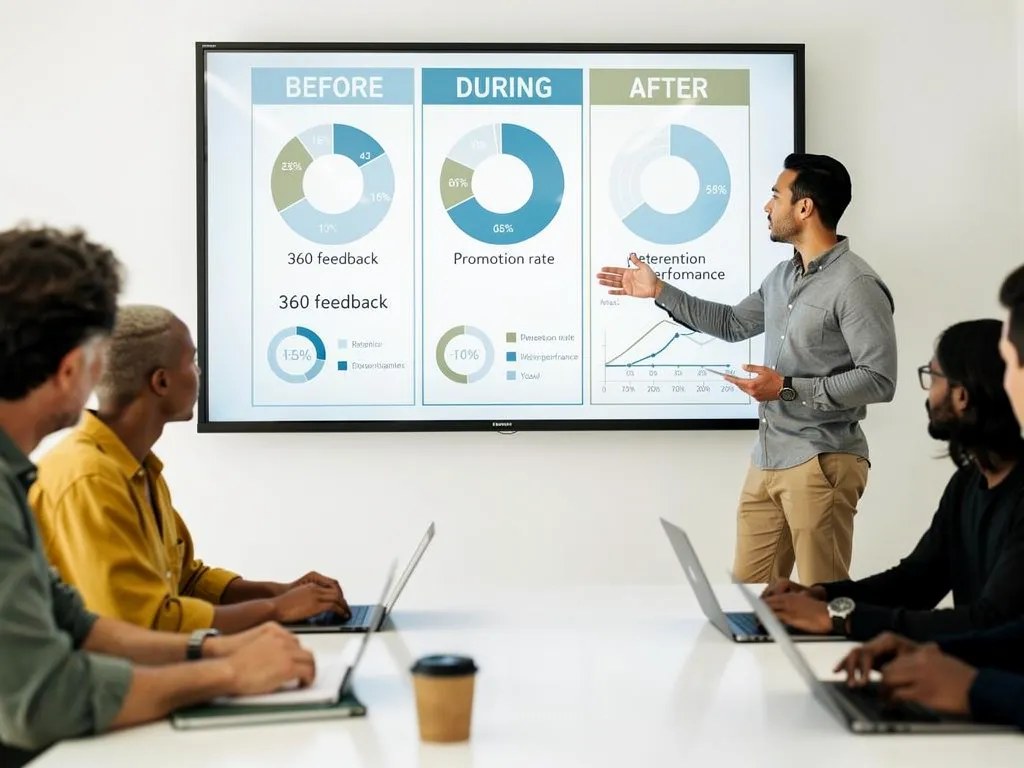
Measurement requires three checkpoints: before the program starts, while it runs, and after it ends. Skip any one of these and you lose the ability to prove what actually changed. Baseline data tells you where leaders stand today. Mid-program data shows whether the approach is working. Post-program data confirms whether behavior actually shifted.
Numbers matter more than anecdotes here. Track 360-degree feedback scores, promotion rates, retention, and team performance before and after your leadership skills development effort. These four metrics give you a defensible story to tell your CFO, not just a gut feeling that "engagement felt higher."
Compare pre- and post-program scores across the same leaders and teams. If 360-degree ratings climb, promotions increase among participants, and retention improves on their teams, you have evidence, not opinion. Weak or apartment results on these same measures signal a program that needs redesign, not just a repeat.
Consider building your measurement framework around these checkpoints:
FlashPoint Leadership structures its own leadership competencies training work around this same before-during-after discipline. As a boutique, 13-person firm based in Indianapolis, Indiana, the company pairs that agility with client-reported outcomes, including a a notable share Net Promoter Score, more than 300 clients served, and over 100,000 leaders impacted. Your program deserves the same rigor.
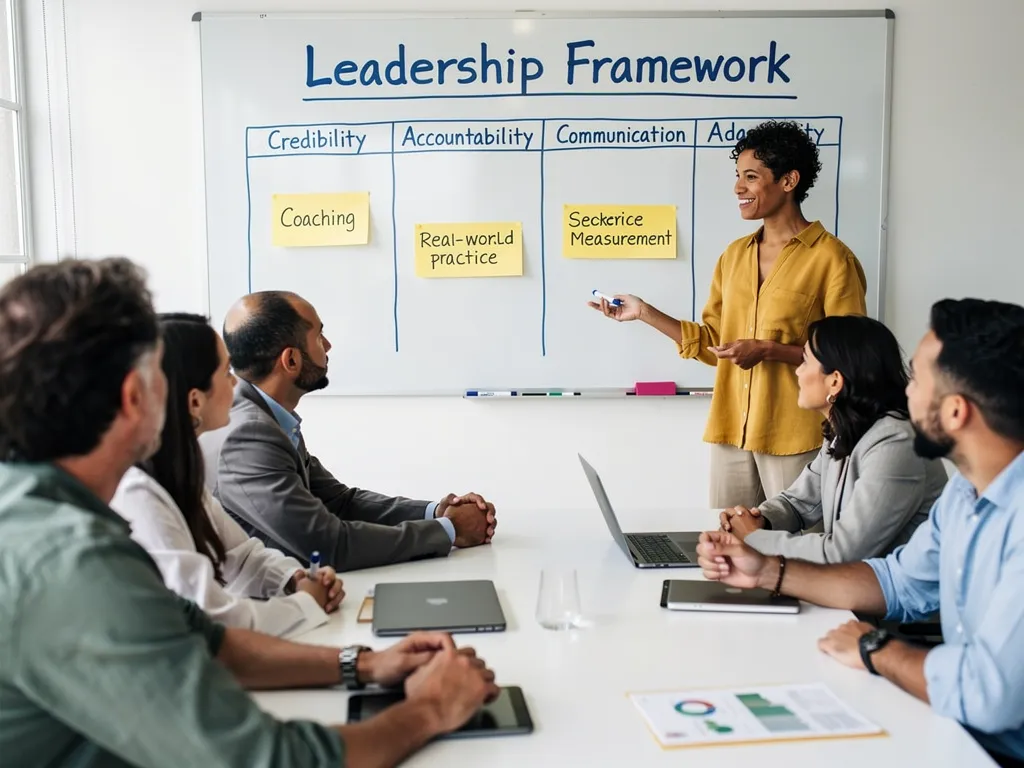
Building leaders who can actually lead starts with rejecting generic content. When you tie skills like credibility, accountability, communication, and adaptability to your organization's real priorities—and adapt that content to each leadership level—you give leaders a framework they can use, not just admire. Pairing that framework with coaching, real-world application, and before-during-after measurement is what turns a workshop into lasting behavior change.
None of this happens by accident. It takes a partner who co-creates the program with you instead of handing over a pre-packaged deck, and who holds the work to the same rigor you'd expect from any other business investment: clear goals, measurable checkpoints, and evidence that leaders are showing up differently six months later. Get that structure right, and leadership development stops being a line item you defend and becomes a capability your organization can count on.